Why Can’t We Get Things Done?
There are obviously many reasons to the question, “Why can’t we get things done?” When interacting with autistic/ADHD/PDA folks, professionals target what they consider to be “deficits in executive functioning” when they are tasked to solve an inability to comply. I go to a lot of conferences, and most trainers usually jump straight to compensating for those deficits with calendars, timers, and elaborate skills training.
The communities for neurotypes driven by interest and autonomy consistently say the same thing: skills training has limited applications. They often work for a day, a week, maybe a month, and then they become overwhelming like everything else. If they did work, they help in a narrow area, a lot of times inconsistently, and we still have no answers for the rest of the time.
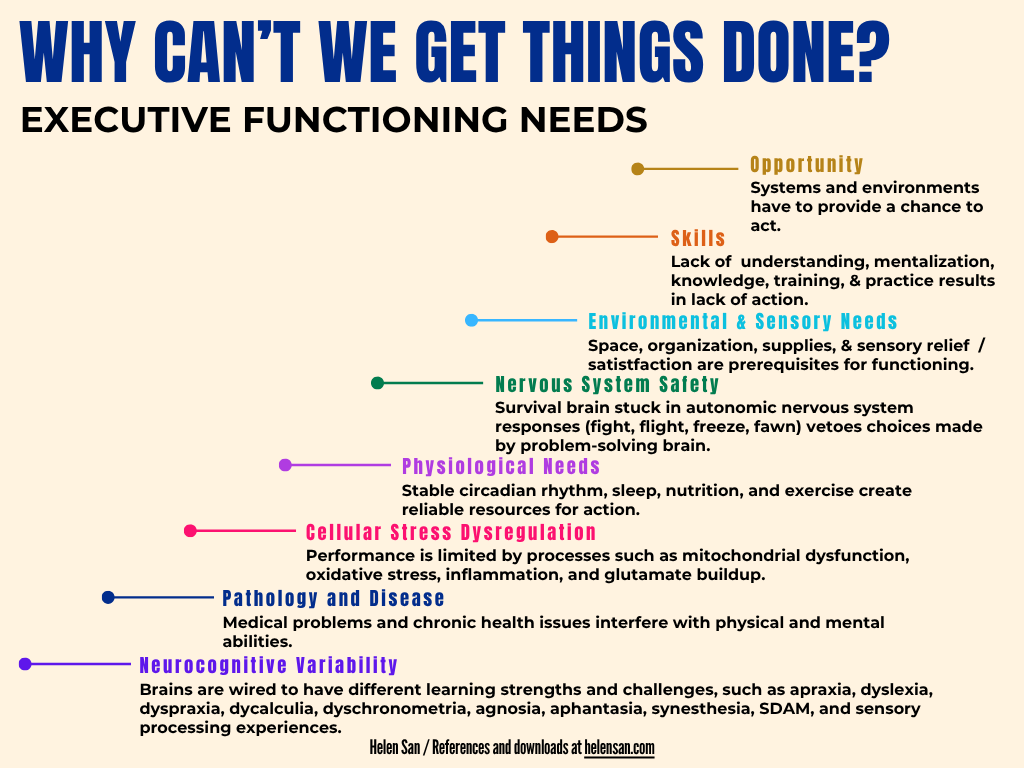
When you look at the list of possible reasons for not being able to comply with demands, you can clearly see a gap between executive functioning needs and where healthcare providers land. There is also a gap between interventions provided by medical professionals and therapy professionals.
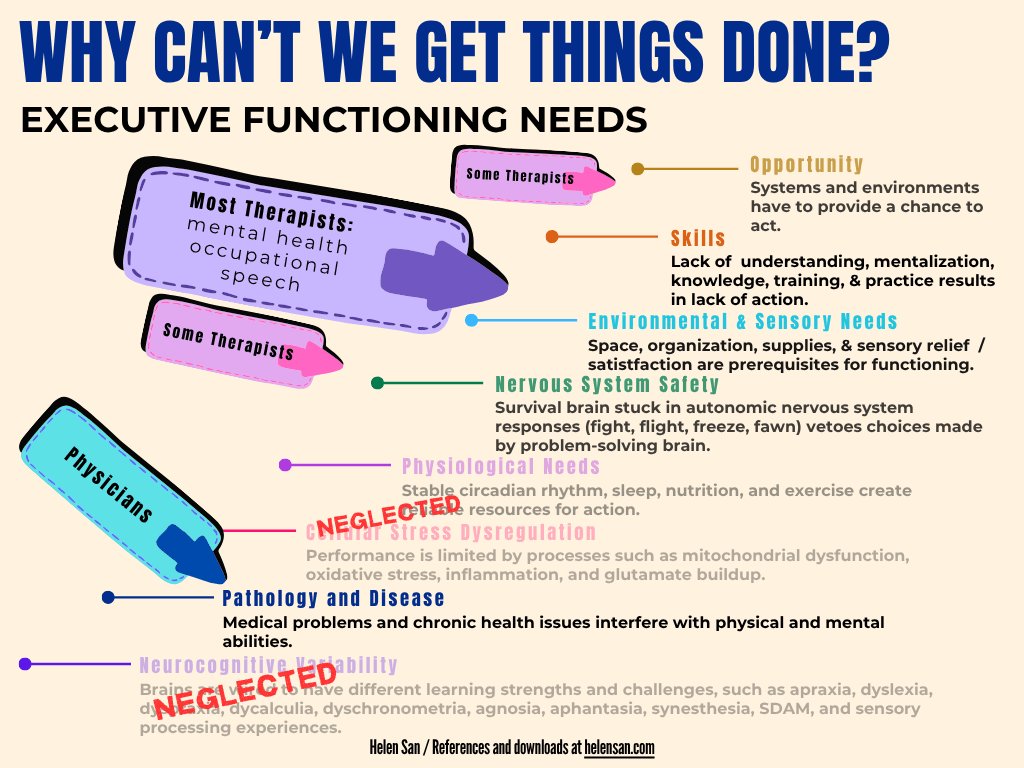
What individuals need is an integrated understanding of their entire body system and meeting their needs at all levels. This understanding will shape expectations, allow for more compassion, and most importantly target needs that are unmet before demanding compliance.
I venture that the answer to “Why can’t we get things done” is that many needs for executive functioing are not met through lack of understanding and neglect, both by professionals and individuals themselves. And sometimes that understanding includes changing what we expect ourselves to do.
References:
Coming soon.

